Media
Natural Refrigerants: St. Louis-Based Supermarket Chain Opting for Transcritical CO2 Refrigeration
Dierbergs Markets opened its first CO2 store in May and second in August, with plans to continue installing the technology
St. Louis, Missouri-based grocery chain Dierbergs Markets is installing transcritical CO2 (R744) refrigeration systems in new stores as part of a long-term strategy, Ben Rola, the company’s Director of Engineering and Maintenance, told NaturalRefrigerants.com.
In August Dierbergs opened its second CO2-cooled store, a 73,000ft2 (6,780m2) supermarket in St. Charles. Its first CO2-cooled store, a 75,000ft2 (6,970m2) supermarket, opened in University City in May. The company currently operates 29 stores in Missouri and Illinois, primarily in the greater St. Louis area.
“We see CO2 as the future refrigeration for Dierbergs,” Rola said. “Rather than invest in another generation of synthetic refrigerants and potentially face another [regulatory] transition later, we chose to move directly to a proven natural-refrigerant technology with a much lower global-warming impact.”
St. Charles details: The store uses two transcritical CO2 booster systems to provide roughly 1,400MBH (116.7TR/410kW) of medium-temperature capacity and 500MBH (41.7TR/147kW) of low-temperature capacity, according to Rola.
Heat recovery from the CO2 system provides domestic hot water throughout the store via a heat exchanger.
Reclaimed heat also helps heat a section in the back of the store during the winter.
Dierbergs worked with DC Engineering to design the refrigeration system with CO2 equipment manufactured by Hussmann, a Panasonic subsidiary. The local company Jarrell Mechanical Contractors installed it.
The performance: Research indicates that the CO2 system should be energy-neutral over the course of a year, Rola said, with energy savings during Missouri’s cold winter expected to offset the higher energy demand of its warm, humid summers.
The racks use an adiabatic condenser to keep the system from operating in transcritical mode as much as possible, Rola noted.
Going forward: Dierbergs plans to continue installing CO2 refrigeration systems in new stores, according to Rola.
“Although many of the long-term benefits [of CO2] will be realized over time, the system helps position Dierbergs for EPA [the U.S. Environmental Protection Agency] regulatory changes, while reducing the environmental impact associated with conventional refrigerants,” Rola said.
Dierbergs has not yet integrated a store’s HVAC system with its CO2 refrigeration system. However, it is considering that configuration in a future location, Rola said.
Quotable: “We have benefitted from the experience of other retailers and believe our adoption can help show that this technology is achievable for companies with a smaller footprint,” Rola said.
“We have benefitted from the experience of other retailers and believe our adoption can help show that this technology is achievable for companies with a smaller footprint.”
Ben Rola, Director of Engineering and Maintenance at Dierbergs Markets
Food Price Affordability No Barrier to First Place on Climate-Friendly Supermarket Scorecard
MEDIA RELEASE
For Immediate Release
June 1, 2026
WASHINGTON, DC – Today, the Environmental Investigation Agency (EIA) released its 2026 Climate-Friendly Supermarkets Scorecard, which tracks major U.S. food retailer efforts to address hydrofluorocarbons (HFCs) – superpollutant refrigerants used across the food retail sector – just one week after the Environmental Protection Agency (EPA) rolled back requirements on refrigerant use in the sector in a move condemned by environmental and industry groups.
“Our 2026 scorecard shows that affordability is not a barrier to climate leadership and regulatory uncertainty is no excuse for inaction,” says Avipsa Mahapatra, Climate Campaigner Director at EIA US. “Every new HFC-based refrigeration system installed today locks in high costs and climate pollution for years to come. Companies that choose to fall behind can no longer argue that climate-friendly technology is too expensive, too difficult, or too early.”
This year, most companies reviewed have reported at least some of their store refrigeration systems are entirely HFC-free. ALDI U.S. – scorecard leader and one of the most affordable supermarkets in the country – accounts for the largest share at nearly 1,000 of these stores. EIA’s scorecard tracks progress across three categories: technology adoption of climate-friendly refrigerants (i.e., those with Global Warming Potentials below 10), refrigerant management (leak prevention and repair), and corporate commitments to reduce HFCs.
ALDI continues to lead the scorecard overall, as well as in technology adoption. It remains the only company to have a public target to transition all new and existing stores to natural refrigerants (by 2035).
Eleven companies have a public commitment to reduce use or emissions of HFCs, but there is a gap in time-bound targets, interim benchmarks, and public updates on progress towards these goals, proving a regulatory framework is needed over corporate commitments alone.
Meijer leads on refrigerant management with a reported average annual leak rate below 8% (versus EPA reported industry average of 25%). Broadly, transparency on leaks remains a challenge – only four companies (ALDI, Meijer, Target, and Kroger) disclose leak rates for U.S. stores, despite this data being required under EPA’s refrigerant leak repair recordkeeping and reporting requirements.
A recent EPA and U.S. Department of Justice consent decree with Kroger for alleged violations of refrigerant leak repair provisions under the Clean Air Act is a reminder that voluntary corporate actions are insufficient in curbing the sector’s refrigerant emissions without consistent government enforcement.
“A sector long responsible for high leak rates of these superpollutants now has every tool to accelerate its transition away from them,” says Beth Porter, EIA US Senior Climate Policy Analyst. “Many U.S. retailers have already invested in HFCfree refrigeration systems, and this adoption is advancing more rapidly at the global level, demonstrating a shift towards energy-efficient, climate-friendly alternatives.”
EIA’s scorecard is a call-to-action for companies to practice greater public disclosure on progress to reduce HFC emissions, along with stronger measures to ensure implementation across their operations, and to accelerate the transition to HFC-free refrigerants. While the recent rollback extending HFC use in new equipment through 2032 may tempt some retailers to delay adopting alternatives, the sector cannot afford to wait as global HFC supply shrinks and prices rise.
Further information and interviews with EIA available upon request.
Contact
Holly Koch, Communications and Media Lead, EIA US – hkoch@eia-global.org
Leaking Havoc: 50% of Northern California Supermarkets Surveyed Found Emitting Super Pollutant Greenhouse Gases
New Investigation: Climate-Polluting Leaks Detected at Safeway, Walmart, and Other Major CA Retailers
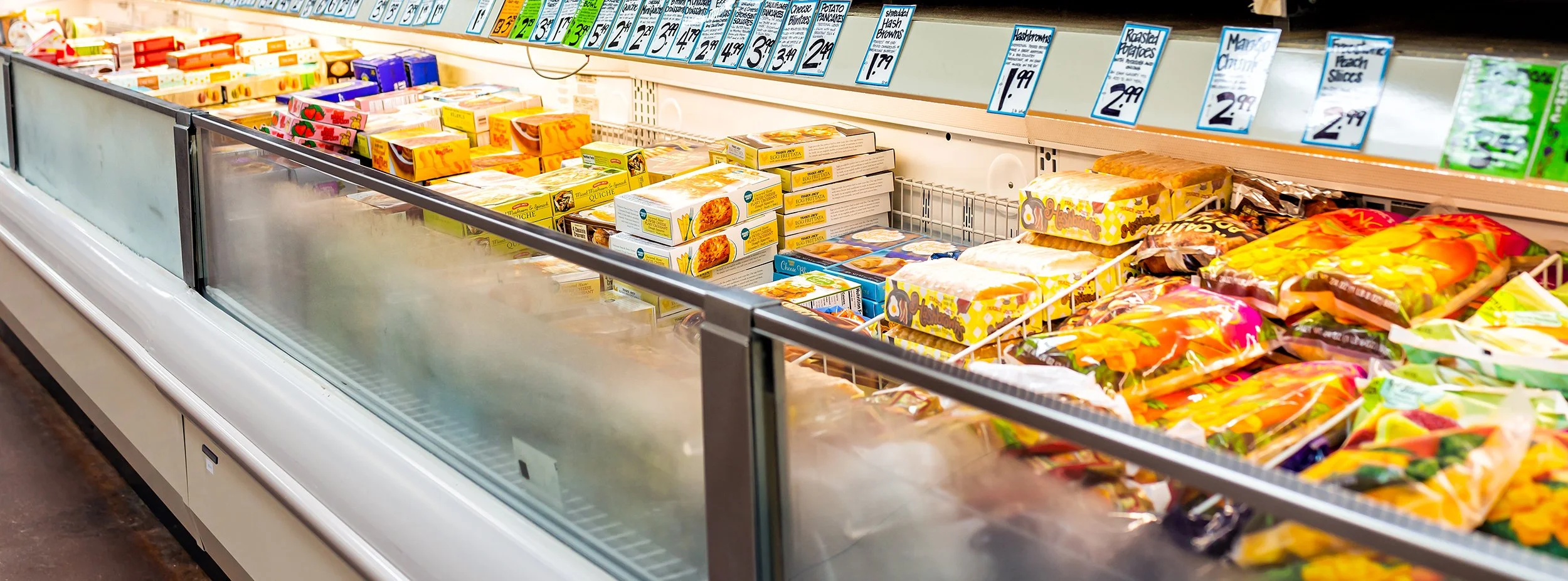
The Environmental Investigation Agency (EIA), Green America and YouthPower Climate Action released a new report, Leaking Havoc in Northern California, investigating leaks of hydrofluorocarbon (HFC) used in refrigeration at major supermarkets in the Bay Area and Sacramento. The organizations visited Safeway, Kroger-owned Ralphs Grocery or Foods Co., the Save Mart Companies (including Lucky), Smart & Final, Walmart and detected leaks at half (50%) of the sites. Previous Leaking Havoc investigations conducted by EIA of stores in the Washington, DC area and New York City found similar leak rates.
Avipsa Mahapatra, Climate Campaign Director at EIA US, said: “Our investigations prove that dangerous, avoidable climate pollutants continue to seep unchecked from supermarkets. California has taken leadership action by creating a program to track and regulate these refrigerant emissions. However, there’s an urgent need for further investment in robust enforcement to stop these leaking super pollutants from undermining our climate goals and public health.”
Key report findings:
HFC refrigerant leaks were detected in 50% of the 28 stores investigated.
Save Mart Companies (including Lucky) had leaks in 75% of stores visited.
Leaks were found in half of the Safeway, Smart & Final, and Walmart stores visited for each company.
Albertsons – parent company of Safeway – and Save Mart have both settled with the California Air Resources Board (CARB) numerous times between 2015 and 2024 for violations of the state’s Refrigerant Management Program (RMP), with penalties totaling nearly $7 million.
The California Air Resources Board (CARB) is the state agency for climate change programs and air pollution control efforts to achieve health-based air-quality standards. The agency’s Refrigerant Management Program (RMP) began in 2009 to reduce emissions from large refrigeration systems, like those used in supermarkets. Under the RMP, companies are required to conduct regular leak inspections for refrigerant leaks and if found, repair within two weeks of detection.
Beth Porter, Senior Climate Policy Analyst at EIA US, said: “For too long, too many companies have accepted wasteful refrigerant leaks as part of the cost of doing business, but the climate and communities have been bearing the full cost of these emissions. We need supermarkets to set zero-leak tolerance policies and prioritize transitioning to widely available natural refrigerants.”
HFCs are a group of man-made greenhouse gases considered to be a “super climate pollutant” because they have thousands of times more global warming potential (GWP) than carbon dioxide (CO2). The average supermarket leaks 25% of its refrigerant each year. Across the 42,000 stores nationwide, EIA estimates U.S. supermarkets release the greenhouse gas equivalent of burning 65 billion pounds of coal every single year.
Dan Howell, Green America Climate Campaigns Director, said: “The Leaking Havoc report shows the supermarket industry needs to take urgent action to protect communities from the devastating effects we are already seeing across the county from climate change. Hurricanes, wildfires, and floods are just a few of the examples of disasters tearing communities down. Stopping leaks of HFCs and switching to safer refrigerants is a big step major supermarkets must take to mitigate climate change.”
Bella Goldwasser, of YouthPower Climate Action, said: “Reducing refrigerant emissions has always been a really exciting solution to Youthpower, because of how high impact the change would be. HFCs’ staggering warming power, coupled with their shorter lifetime, mean they are an incredible way to reduce the heat trapped in our atmosphere quickly, which we need right now. More policymakers should have this important information, so we can establish more rigorous standards for detecting and preventing leaks. Collecting data about the harm related to leaks also helps to underscore the importance of transitioning to low-GWP natural refrigerants as soon as possible.”
In September, the EPA finalized a new rule under the American Innovation and Manufacturing (AIM) Act that includes requirements for repairing leaking refrigeration equipment and installing automatic leak detection systems. According to the agency, “[the] rule will provide additional cumulative greenhouse gas emissions reductions of approximately 120 million metric tons of carbon dioxide equivalent, an incremental net benefit of at least $6.9 billion.”
Gristedes Supermarkets Admits to Leaking Climate Pollutants
After a EIA and 350NYC investigation exposed how Gristedes Supermarkets are leaking climate-polluting refrigerants, the NYC-based chain has being held accountable for violating EPA regulations in a civil lawsuit.

Gristedes Supermarkets, a major New York grocery chain, has admitted to and accepted responsibility for violations that resulted in the substantial release of greenhouse gases into the atmosphere. Legal action taken by the U.S. Attorney’s Office for the Southern District of New York against Gristedes Supermarkets for significant violations of refrigerant management, mandates a US$400,000 civil penalty and extensive repairs, costing millions of dollars, to curb future emissions of harmful refrigerants.
The Environmental Investigation Agency (EIA US) and 350NYC.org investigated Gristedes stores in September 2022 using an industry-recognized portable leak detector, and found all seven stores were leaking super pollutant greenhouse gases used as refrigerants in violation of regulations under the Clean Air Act and the Environmental Protection Agency’s (EPA) Recycling and Emissions Reduction Rule.
“Supermarkets have no excuse to continue using and leaking potent climate pollutants. Our investigations showed how Gristedes was failing to control these preventable emissions, violating laws and damaging our planet. This legal action is a welcome warning to companies that there are serious consequences to climate inaction.” said Avipsa Mahapatra, Climate Campaign Director, EIA US.
Gristedes was using hydrofluorocarbons (HFCs) 4,000 times more powerful than CO2., as well as hydrochlorofluorocarbons (HCFCs) and chlorofluorocarbons (CFCs), which destroy the ozone layer and the climate. All of the substances noted in EIA and 350NYC’s investigation into Gristedes stores are subject to regulation. Ozone depleting refrigerants are subject to existing Clean Air Act requirements for supermarket owners to track and repair major leaks. The investigation findings, representing 35% of the company’s total locations, not only demonstrated leaks but also strongly suggested a company-wide problem of using outdated equipment prone to high leak rates.
Margaret Perkins from 350NYC.org said: “This action emphasizes the importance of monitoring and continuous enforcement of the EPA regulations on refrigerant emissions.”
U.S. Attorney Damian Williams highlighted the severity of the violations, noting that between 2019 and 2021, Gristedes’ refrigerant emissions equate to the global warming impact of driving a car 140,000,000 miles. As a result of the lawsuit, Gristedes is required to reduce its emissions by over 70% from their 2020 levels to mitigate the environmental damage caused.
EIA US and 350NYC.org applaud this legal outcome, which requires Gristedes to take actions such as:
Pay a civil penalty of US$400,000.
Implement repairs and upgrades to commercial refrigeration equipment at an estimated cost of US$13,500,000.
Adopt a comprehensive refrigerant compliance management plan.
Convert three stores to use advanced refrigerants with low global warming potential.
Reduce corporate-wide leak rates below 16%.
Failure to comply with these mandates will result in significant additional penalties.
This news follows action on polluting HFC gases out of the state of Washington, where the state’s Department of Ecology issued a US$1.6 million penalty to the Home Depot for selling prohibited HFC products.
EIA SCORECARD: U.S. Supermarkets Still Clinging to Climate Super Pollutants
WASHINGTON DC – Today, the Environmental Investigation Agency (EIA) released its second Climate-Friendly Supermarket Scorecard assessing the largest U.S. supermarket chains on actions to reduce hydrofluorocarbons (HFCs) – potent greenhouse gases used in cooling with climate impacts thousands of times higher than CO2. Overall, despite the widespread availability of climate-friendly technology, of the sixteen companies evaluated, only two companies received passing scores.
“Congress, courts, and corporations continue to squander opportunities for climate action in this most urgent decade. This includes the U.S. supermarket sector which, barring incremental progress by some companies, has overall shown a lackluster progress in breaking away from HFCs,” said Avipsa Mahapatra, Climate Campaign Lead for EIA. “It is imperative that supermarket chains dramatically scale up adoption of HFC-free cooling as it not only makes climate sense, but also makes business sense given new regulations would inevitably lead to supply shortages and higher prices of HFCs.”
The scorecard assesses supermarkets in three key areas: HFC-free technology adoption, refrigerant management, and policy and commitments. EIA used the best publicly available information and responses from companies that chose to participate in the assessment. Results show:
ALDI, Whole Foods, and Target lead the sector with the highest overall scores. ALDI is the top scorer overall and in technology adoption with hundreds more HFC-free stores than any competitor; Meijer is the highest scorer in refrigerant management; and Walmart scored the highest in policy and commitments.
Other than the top three scorers, each of the remaining thirteen companies only have less than one percent of their stores using HFC-free cooling.
Only three companies (ALDI, Target, and Walmart) have a public, time-bound commitment to end use of HFCs.
No company scored higher than 80% leaving our highest tier of progress on this issue empty. There is significant room for improvement even for our top scorers; no company is excelling in all three categories.
Walmart received a 15% overall score on EIA’s 2020 Scorecard. Following public pressure and EIA’s investigative report on its stores leaking HFCs, now the company has opened its first U.S. HFC-free store, set a timeline to phase out HFCs, and advocated for regulations on HFCs, raising its overall score to 28% this year.
Giant Eagle, Meijer, and Southeastern Grocers have yet to install HFC-free refrigeration in a single store, although several stores have partial installations.
“Public, shareholder, and regulatory pressure is growing for companies to tackle these climate-damaging emissions,” said Beth Porter, Senior Climate Policy Analyst at EIA. “We’re calling on retailers to immediately commit to using HFC-free systems in all new stores and to release time-bound plans to end their use of HFCs across their operations.”
EIA’s Call to Action provides specific recommendations to supermarkets to act on this vital opportunity to combat climate change.
Contact:
Avipsa Mahapatra, EIA Climate Campaign Lead, via amahapatra@eia-global.org
ALDI becomes first U.S. food retailer to commit to natural refrigerants across all stores
ALDI’s industry-leading climate commitment to phase-out super pollutant refrigerants
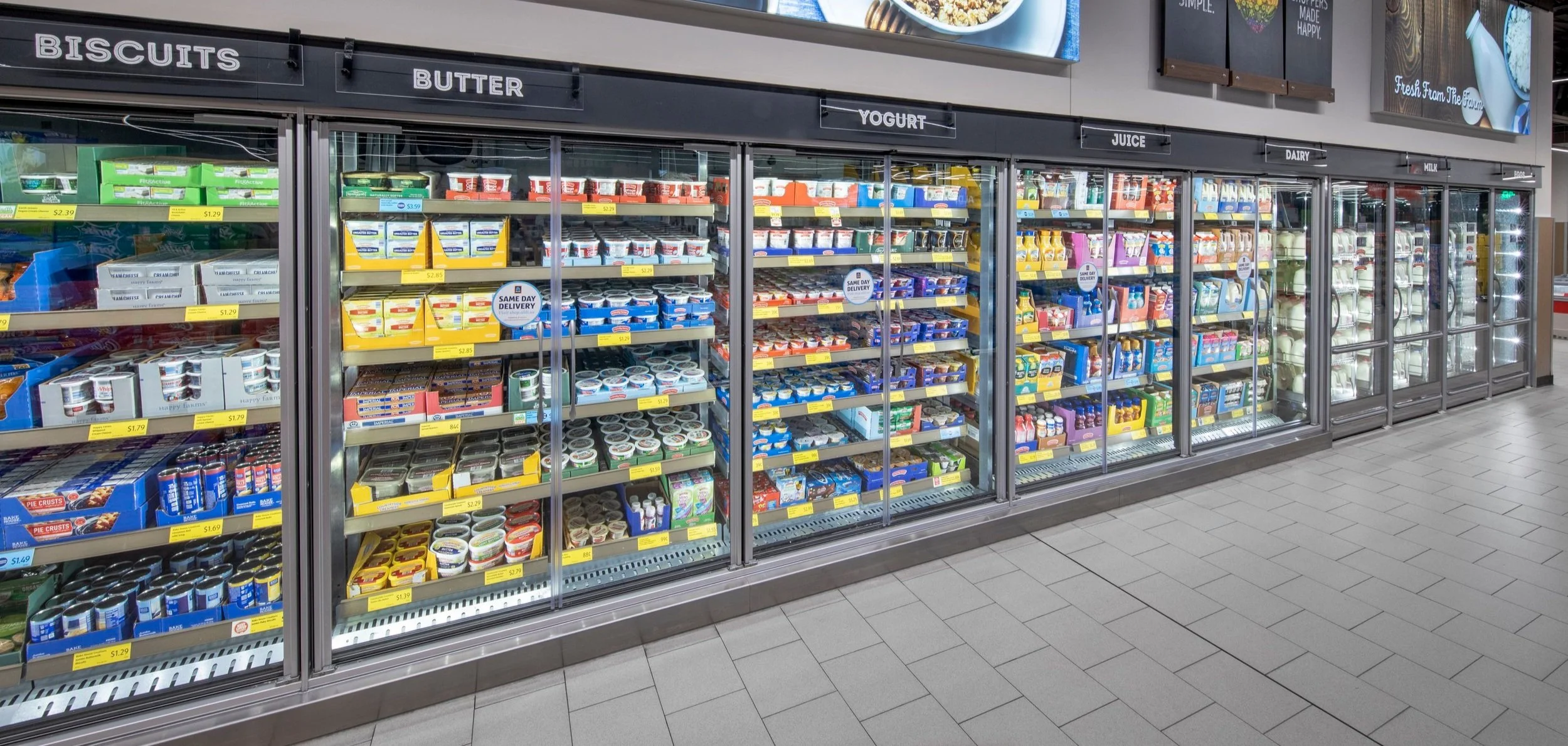
Major U.S. supermarket chain ALDI has committed to transition to natural refrigerants across all of its 2300+ U.S. stores before the end of 2035. ALDI has led action to tackle climate-polluting refrigerants for years, and its recent announcement raises the bar to a new level for U.S. food retailers.
Potent ‘super pollutants’ called hydrofluorocarbons (HFCs) used as refrigerants are leaking out of U.S. supermarkets and grocery stores, equating to burning 49 billion pounds of coal every year. HFCs are human-made greenhouse gases with global warming potentials (GWP) thousands of times higher than the same amount of carbon dioxide. They’re used mainly as refrigerants in cooling systems – from our fridges, cars, and home air conditioners to factories and supermarkets. Today, HFCs are the fastest growing greenhouse gases in the world.
Major U.S. food retailers have been slow to transition to HFC-free natural refrigerant alternatives, lagging behind counterparts in the European Union. Adoption of climate-friendly natural refrigerants has accelerated in the U.S. in recent years as companies move to transition away from HFCs to comply with emerging regulatory requirements, however there is a long way to go for many food retailers in the U.S. and across much of the rest of the globe.
HFCs make up a staggering 60% of Scope 1 emissions for many major U.S. food retailers such as Kroger and Walmart, and failure to accelerate the transition away from HFCs could prevent these companies from meeting science-based climate targets.
This commitment makes ALDI the first company in the U.S. to set an end date for completing a transition to all natural refrigerant technologies such as carbon dioxide and propane, completely phasing out HFCs.
An important aspect of this commitment is that it goes beyond using refrigerant alternatives in new and remodeled stores, to also replacing HFCs in existing stores. Other U.S. companies have stated goals to use climate-friendly refrigerants in new stores, but ALDI is the first to commit to achieve this across all new and existing refrigerant systems by a targeted date.
Some companies have focused efforts on curbing refrigerant leaks, another key aspect of reducing HFC emissions, however, ALDI has followed a more holistic approach by both preventing system leaks and also seizing opportunities to transition its stores to natural refrigerants.
ALDI reports using natural refrigerants in over 600 stores, which helps the company prevent nearly 60% of potential carbon emissions each year.
EIA’s Supermarket Scorecard assesses the largest supermarket chains in the U.S. on three key areas: HFC-free technology adoption, refrigerant management, and policy and commitments. ALDI has secured the top score overall and in technology adoption for several years, as it has deployed HFC-free equipment in more stores than any other company across North America.
EIA’s report, Beyond Words, calls for companies to commit to more ambitious climate action in the cooling sector. ALDI has started off 2024 as the first company to make a cooling commitment that meets the urgency of the climate crisis. The question now is, who will follow their lead?
Stay tuned for the next edition of EIA’s Supermarket Scorecard coming this spring.
U.S. Supermarkets Drag Feet on Climate-Friendly Refrigerants, EIA Scorecard Highlights
Today, the Environmental Investigation Agency (EIA) released its third bi-annual Climate-Friendly Supermarket Scorecard assessing major U.S. supermarket chains on actions to reduce hydrofluorocarbons (HFCs) – potent greenhouse gases used in cooling with climate impacts thousands of times higher than CO2. Overall, despite the widespread availability of climate-friendly technology, of the sixteen companies evaluated, only three companies received passing scores.
“Our third scorecard serves as a stark wake-up call: the biggest American supermarkets continue to use and leak easily avoidable super pollutants. The lack of transparency and sluggish adoption of HFC-free technology by several of these companies receiving failing scores, is inexcusable in the face of our climate crisis.” said Avipsa Mahapatra, EIA’s Climate Campaign Director. “We laud the handful of companies like Aldi, that are leading the charge by transparently and publicly sharing their time-bound action plans on eliminating the use of HFCs”
EIA Scorecard reveals:
ALDI, Whole Foods, and Target continue to lead the sector with the highest overall scores.
ALDI is the top scorer overall and in technology adoption with hundreds more HFC-free stores than any competitor; Meijer is the highest scorer in refrigerant management with the lowest leak rate; and Walmart and ALDI are tied for the highest in policy engagement and commitments.
Giant Eagle, Meijer, and Southeastern Grocers have yet to install HFC-free refrigeration in a single store, although several stores have partial installations.
Eleven of the sixteen companies have less than one percent of their stores using entirely ultra-low GWP refrigerants.
Walmart has made a major commitment to eliminate all emissions including HFCs by 2040, but has only installed ultra-low GWP refrigerants in a single store and released no specifics on its implementation plans or anticipated milestones.
Twelve of the sixteen companies have a public commitment to reduce refrigerant emissions; however, only eight have a time-bound goal for reducing HFCs.
Emissions from refrigerant leaks among all U.S. supermarkets are estimated to equal 65 billion pounds of coal burned in a year. Several companies showed progress on efforts to reduce refrigerant leak rates, although only five of the companies disclose an annual average leak rate.
There has been an increase in commitments by companies to tackle refrigerant emissions, but EIA’s scorecard results indicate a slow adoption of climate-friendly, ultra-low global warming potential (<10 GWP) refrigerants in stores and limited details about implementation plans to meet these company goals.
“EIA urges citizens, investors, and companies to commit to and implement actions toward a complete phase out of these gases globally,” said Beth Porter, Senior Climate Policy Analyst with EIA. “Long-term commitments need interim targets and public progress to ensure the ultimate goal to curb these emissions is achieved on time.”
EIA calls on these major companies to develop detailed strategies with interim targets to phase out HFC refrigerants from all stores, immediately commit to using HFC-free technology in new stores, and develop no-tolerance policies for leaks to ensure rapid repair to curb emissions.
Full scorecard results and recommended actions for improvement here https://www.climatefriendlysupermarkets.org/scorecard
As Thousands Petition Kroger to Take Action on "Super Pollutant" Refrigerants, 35% of Voting Shareholders Voice Agreement

In Less Than 2 Weeks, 12,000+ Customers Sign Letter to Kroger CEO on Eliminating the Use of Hydrofluorocarbons that Fuel the Climate Crisis; Consumer Pressure Will Continue Until Kroger Successfully Addresses HFCs.
WASHINGTON DC – JUNE 24, 2022 – Kroger, the largest grocery chain in the United States, is facing growing pressure from customers over its failure to eliminate hydrofluorocarbons (HFCs), often referred to as “super pollutants,” from its refrigeration systems. HFCs are greenhouse gases with thousands of times the warming capacity of carbon dioxide, and they account for 63% of Kroger’s direct climate emissions.
At the company’s Annual General Meeting, 35% of voting shareholders supported a resolution that the company issue a report on how the company plans to address its HFC and meet its climate goals. In addition, over 12,000 customers signed a petition launched by Green America and Environmental Investigation Agency (EIA) on June 9, demanding CEO Rodney McMullen adopt ultra-low global warming potential (GWP) refrigerants and replace the current HFC systems at all of its nearly 2,800 stores by 2030. Currently, Kroger has only committed to using non-HFC alternatives at seven new stores. Green America and EIA will continue to put pressure on Kroger until the company releases a plan to eliminate the use of HFCs.
Avipsa Mahapatra, Climate Campaign Lead at Environmental Investigation Agency (EIA), said: “While Kroger says it is pursuing ambitious carbon reduction targets, it continues to use obsolete potent super greenhouse gases for cooling. The shareholder resolution and mounting customer pressure underline the reputational risks associated with this cognitive dissonance. Kroger has an obligation to stop its continued reliance on these gases, to walk the talk and become a part of the solution to the climate crisis.”
Dan Howells, Climate Campaigns Director at Green America, said: “Kroger needs to listen to customers who understand the dangers of climate change and the need for companies like Kroger to address it. Significant action is needed to keep the communities Kroger serves safe from climate impacts and what they are currently doing is basically ‘clean up in aisle nine.’”
The shareholder resolution filed by Friends Fiduciary asked Kroger to prepare a report on eliminating the use of hydrofluorocarbons. The resolution noted that “Kroger’s apparent lack of a comprehensive plan to eliminate HFCs in refrigeration exposes Kroger to financial, regulatory, and reputational risks.”
It was voted on yesterday during the company’s annual general meeting and received a strong showing of support from investors. This was the second-ever shareholder resolution on refrigerants at a major corporation, indicating a growing awareness and interest among investors to tackle the issue. At the shareholder meeting Kroger pledged to include HFCs in its upcoming 2022 Climate Roadmap but did not provide any specifics on how the company will address HFCs.
Kroger scored only 16/100 on EIA’s 2020 Supermarket Scorecard, which tracks the largest U.S. supermarkets on their efforts to reduce HFC emissions, lagging behind its competitors: ALDI, Whole Foods, Target, Publix, Meijer and others.
MEDIA CONTACT: Max Karlin for Green America, (703) 276-3255 or mkarlin@hastinsgroup.com. Avipsa Mahapatra for EIA, amahapatra@eia-global.org.
——-
ABOUT
Green America is the nation’s leading green economy organization. Founded in 1982, Green America provides the economic strategies, organizing power and practical tools for businesses and individuals to solve today’s social and environmental problems. www.GreenAmerica.org. Over a hundred thousand consumers have joined Green America’s Cool It Campaign to demand that supermarkets cut HFC super pollutants that accelerate the climate crisis.
Environmental Investigation Agency (EIA) is an independent non-profit campaigning organization dedicated to identifying, investigating, and implementing solutions to protect endangered wildlife, forests, and the global climate. EIA Climate campaign is working to eliminate powerful greenhouse gases and improve energy efficiency in the cooling sector, and expose related illicit trade to campaign for new policies, improved governance, and more effective enforcement. us.eia.org. EIA created the first interactive grassroots platform for corporate accountability on refrigerants, at www.climatefriendlysupermarkets.org. Hundreds of citizen activists have submitted data to EIA’s map and signed petitions urging supermarkets to transition to HFC-free technologies.
msn: Kroger Is Facing Backlash for Having This in Stores
The grocer is now under fire for the use of other chemicals in its stores.
Now, Kroger is back in hot water with environmental organizations. On June 9, the Environmental Investigation Agency (EIA) announced that it has partnered with the nonprofit Green America to launch an initiative against Kroger for its use of hydrofluorocarbons (HFCs) in its refrigeration systems. According to the EIA, HFCs are greenhouse gases commonly used for cooling and refrigeration that have high Global Warming Potential (GWP) because they have "thousands of times the warming capacity of carbon dioxide." Best Life has reached out to Kroger for comment but has not yet heard back.
"HFCs account for 63 percent of Kroger's direct climate emissions," Dan Howells, the climate campaigns director at Green America, said in a statement. "Kroger has known about this problem for years, but its efforts are failing to meet the urgency of the issue. The climate crisis is here, and we need Kroger to provide a clear, detailed plan to cut these dangerous emissions on a more aggressive timeline."
Consumers and Investors Urge Kroger to Act on HFCs
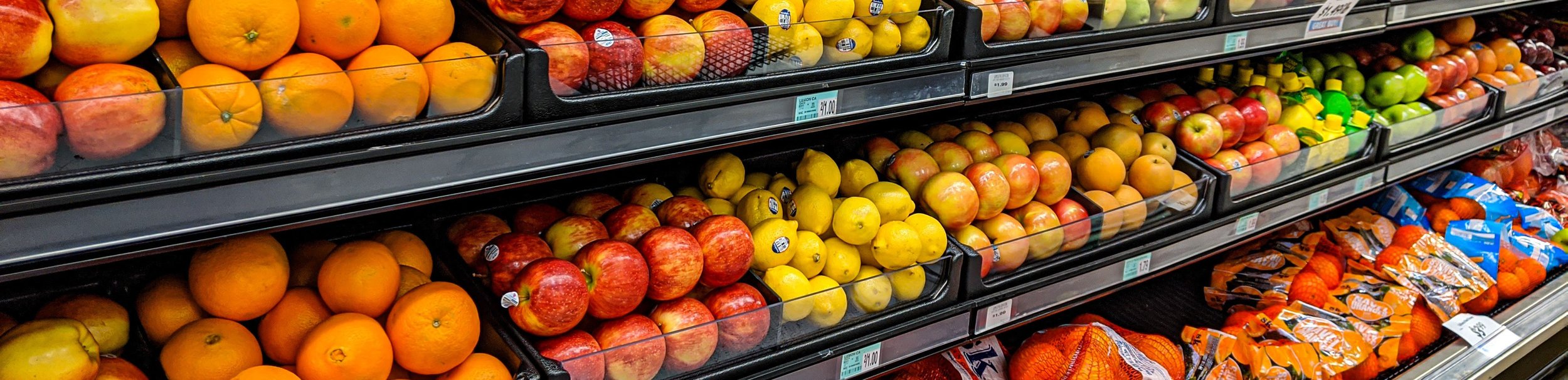
Over 63% of Kroger’s direct climate-damaging emissions are HFCs, highly potent greenhouse gases used in its refrigeration. HFCs have enormous global warming power and are accelerating the climate crisis.
Despite the significant contribution of HFCs on Kroger’s climate impacts, the company has not set a target to end its use of these potent refrigerants. That’s why EIA is partnering with Green America and other organizations to push Kroger to phase out HFCs from all its stores by 2030 (sign our joint action here).
HFCs have thousands of times the global warming potential (GWP) of carbon dioxide and are used as refrigerants in cooling systems. Refrigerant leaks from U.S. supermarkets are the emissions equivalent of 49 billion pounds of coal being burned each year. Several companies have taken action to reduce HFCs and switch to climate-friendly refrigerant alternatives in many stores. But Kroger has only committed to use HFC-free refrigeration in seven new stores, but has no plans for its nearly 2,800 existing stores. At this rate, it would take Kroger centuries to move off HFCs.
Public and regulatory pressure has successfully pushed retail giants like Walmart to begin addressing HFCs. As recently as 2020, Walmart's HFC emissions were steadily rising each year, and it had no commitment or public plan to stop using HFCs. However, over hundred thousand people signed our petition to Walmart and investors urged the company to release a plan on transitioning away from HFCs. EIA’s investigative report on Walmart’s refrigerant leaks gained media attention, building more pressure on the retailer to address its emissions.
Now, Walmart is finally taking steps in the right direction by setting a goal to phase out HFCs, opening its first U.S. HFC-free store, and stating it will use ultra-low GWP refrigerants in all new construction where commercially available. Walmart has also engaged in policy advocacy for stronger regulations.
Walmart follows the steps of major food retailers transitioning to climate-friendly refrigerants, including Aldi, Target, and Whole Foods. Given the widespread adoption of HFC-free technologies in the US today, there’s no reason why Kroger should continue to delay transitioning away from HFCs. While Kroger has adopted practices to improve its refrigerant management, it has done too little to scale installation of HFC-free technology. Kroger’s public materials do not include a time bound commitment nor a plan for transitioning to HFC-free systems. Additionally, Kroger scored 16/100 on EIA’s 2020 Supermarket Scorecard, lagging behind many of its competitors on addressing HFCs.
Kroger’s investors are calling on the company to develop a plan to end its use of HFCs through a shareholder resolutionfiled by Friends Fiduciary to be voted on at the annual shareholder meeting on June 23. As it states, “Kroger’s apparent lack of a comprehensive plan to eliminate HFCs in refrigeration exposes Kroger to financial, regulatory and reputational risks.” We hope many of Kroger’s investors will join Friends Fiduciary in urging the company to take action by supporting the proposal.
It’s past time for Kroger, one of the leading food retailers in the United States, to take action on this important climate issue. That’s why our organizations are urging Kroger to commit to adopting ultra-low GWP refrigerants (<10 GWP) in all new stores and retrofits, and to develop a plan to phase out use of HFCs by 2030.
Join EIA and thousands of consumers who have signed, calling on Kroger to transition away from harmful super pollutants.
R744: Walmart Acknowledges Opening First U.S. Store with Transcritical CO2 System in New York
U.S. multinational retailing giant Walmart has revealed that it has opened its first U.S. store to use transcritical CO2 (R744) refrigeration in Yaphank, New York, located on Long Island.
In a fiscal year 2022 climate brief, the Bentonville, Arkansas-based company noted that the Yaphank Supercenter, which opened in November 2021, “is the first to fully utilize CO2 technology for the store’s refrigeration needs.”
Walmart also operates more than 100 facilities (stores and distribution centers) using “ultra-low GWP refrigerants,” including CO2, glycol and ammonia/NH3 (R717), it said in the climate brief, adding, “We are using such systems in new construction where commercially available.” The ammonia is used in distribution center systems, while in other stores CO2 and glycol are used as secondary refrigerants.
EPA Must Stop a New Black Market in Super Greenhouse Gases
By Cynthia Giles and Alexander von Bismarck
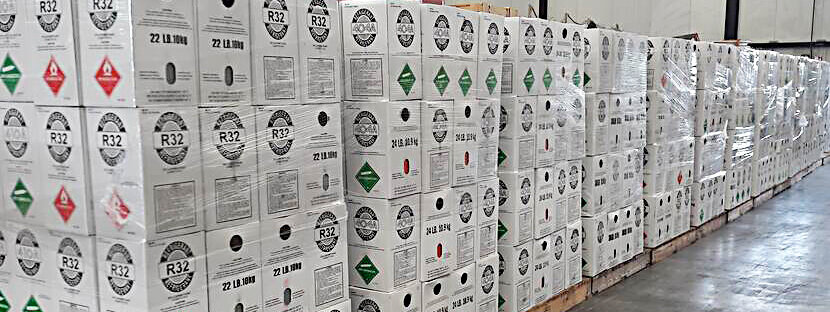
Against the backdrop of the booming and prosperous drug trade of the 1990s, a lesser known but also lethal black market was emerging from an unfamiliar source – gases that caused the hole in the ozone layer. At the same time ozone-destroying chlorofluorocarbons (CFCs) were being phased out globally, CFCs were flooding into the United States illegally. A senior DOJ prosecutor reported that CFC busts at the US-Mexico border were second only to marijuana in the value of goods seized. A cylinder of CFCs yielded a 13 to 1 profit, with a street value that nearly matched that of cocaine. Rampant criminal trade in these dangerous chemicals wreaked havoc around the globe.
We are in danger of the same thing happening again – this time for hydrofluorocarbons (HFCs). HFCs are powerful climate-forcing pollutants used primarily in refrigeration. In the near term they are hundreds to thousands of times more climate-damaging than carbon. The recent Intergovernmental Panel on Climate Change report underscores the urgency of phasing out these climate super-pollutants, and Congress directed EPA to do just that.
There is good news and bad news.
The good news is that EPA’s proposed rule to slash HFCs is equal to the task. EPA marshalled the power of information technology and strong compliance design to cut illegal imports off at the pass. EPA’s draft rule requires real time checks at the border, so illegal products can’t get in. It bans disposable containers, the favored vehicle for smugglers. And it tracks shipments and product throughout the supply chain using widely available QR codes, which make criminal activity much harder and also arm buyers with the ability to avoid unlawful products. EPA’s proposal would make it much more difficult to cheat, and far easier to find cheaters and hold them to account.
The bad news is that despite widespread industry support for EPA’s rule, a handful of companies are pushing back. Their challenges threaten to undermine the rule. They are opposing EPA’s sensible and necessary controls, citing near term costs. They want to retain the kind of containers that smugglers prefer. They want to skip the QR codes, even though these are in wide use already. Their short-sighted focus on saving a few dollars now would open the floodgates to a black market that could swamp the climate advantages of this can’t-wait regulation. The math doesn’t add up: tiny cost savings that put billions in climate benefits at risk.
We’ve seen this catastrophe unfold before. Europe’s HFC phasedown is being overrun with unlawful products. Best estimate is that illegal imports are already 30% of the legal supply, and that’s expected to grow as tighter controls kick in. If the US experience with illegal HFCs tracks Europe’s, that’d be equivalent to adding at least 12 million cars to US roads.
EPA has to stick to its guns on the HFC rule, scheduled to be finalized this month. If the final rule waters down the compliance-forcing provisions to suit the short-term preferences of a few, the US will undoubtedly face the same compliance debacle Europe is confronting now. It will be CFC redux. Runaway climate impacts from the inevitable black market will be impossible to rein in. EPA got it right in the proposed rule. Let’s keep it that way.
Cynthia Giles served as the Assistant Administrator of EPA’s Office of Enforcement and Compliance Assurance during the Obama Administration. Alexander von Bismarck is the Executive Director of the Environmental Investigation Agency, U.S., eia.org.
Image credit: Inspectie Leefomgeving en Transport
CA.org: CARB settles with Albertsons grocery chain for $5.1 million for violations of the Refrigerant Management Program
SACRAMENTO – The California Air Resources Board reached a settlement agreement with The Albertsons Companies, Inc. for $5.1 million for violations of the Refrigerant Management Program (RMP) that regulates large, stationary industrial refrigerant systems to reduce greenhouse gas emissions.
During regular inspections under the RMP, CARB investigators found that Albertsons failed to comply with the program’s requirements across Albertsons stores in California between 2016-2018. Violations included failure to annually audit and calibrate automatic leak detection equipment; failure to ensure that all detected refrigerant leaks were repaired within 14 days of detection by a certified technician; failure to accurately register and report their stores’ refrigeration systems; and failure to maintain required records for at least five years.
Read the full article on CA.org.
Brief to Shareholders of Walmart re: Shareholder Proposal to Improve and Report on Refrigerant Management and Associated Emissions
Recommended: Vote FOR Proposal #4 asking for Walmart to “issue a report, at reasonable cost and omitting proprietary information, describing if and how it plans to limit its impact on climate change by increasing the scale, pace, and rigor of its plans to reduce refrigerants released from its operations.”
Dear Walmart Shareholder,
Highly potent greenhouse gases called hydrofluorocarbons (HFCs) are leaking out of Walmart facilities and contribute nearly half of Walmart’s direct climate-damaging emissions. HFCs have thousands of times the global warming potential (GWP) of carbon dioxide and are commonly used as refrigerants in supermarket cooling systems, but regularly leak out through faulty equipment.
Walmart reported over three million metric tons of HFC emissions in 2019, which equates to more than half a million cars on the road each year.1 HFCs make up a staggering 48 percent of Walmart’s direct (Scope 1) emissions.2 Rapid adoption of available HFC-free technologies and implementing best practices to reduce refrigerant leaks can protect the company from growing reputational and market risk of its laggard status, and minimize the financial impacts of anticipated skyrocketing HFC refrigerant prices under the approaching HFC phase-down regulations.
Environmental Investigation Agency and Green America urge you to vote in favor of the shareholder resolution #4 on Walmart’s refrigerant practices.
WhoWhatWhy: Some Grocers Are Far From Green
What appeared on the display of the citizen investigator’s infrared camera looked ominous: wafts of black smoke invisible to the naked eye. The hand-held leak detector kept sounding its alarm in rapid beeps that warned of escaping refrigerant gas. Other shoppers at the Giant Food supermarket, one of many in the Washington, DC, metropolitan area, strolled unaware down the store’s freezer aisle. The vapor wouldn’t hurt their health directly but would contribute to climate change; it was a thousand times more potent than carbon dioxide at trapping the Earth’s heat.
The finding is just one data point in a mid-February report by the nonprofit Environmental Investigation Agency (EIA). It found that more than half the grocery stores sampled in the greater Washington, DC, area leaked hydrofluorocarbons (HFCs), greenhouse gases far more damaging than carbon dioxide. Left unchecked, leaks in the 38,000-odd supermarkets across the US would be the equivalent of burning an additional 49 billion pounds of coal each year…
Read the full article on WhoWhatWhy.
Washington Post: There’s an invisible climate threat seeping from grocery store freezers. Biden wants to change that.
Some of the climate impacts of a grocery store trip are obvious, like the fuel it takes to get there and the electricity that keeps its lights glowing, conveyor belts moving and scanners beeping. But then there are the invisible gases seeping out into the atmosphere when you reach for your ice cream of choice.
In nearly every supermarket in America, a network of pipes transports compressed refrigerants that keep perishable goods cold. Most of these chemicals are hydrofluorocarbons — greenhouse gases thousands of times more powerful than carbon dioxide — which often escape through cracks or systems that were not properly installed. Once they leak, they are destined to pollute the atmosphere…
hydrocarbons21.com: U.S. NGO Measures HFC Leaks in Grocery Aisles
In a months-long investigation of 45 grocery stores in the Washington, D.C. metropolitan area, the Environmental Investigation Agency found “measurable leaks” of HFC refrigerants in the refrigerated aisles at 57% of the stores.
EIA investigators brought leak detectors into the stores to measure leaks starting at 2ppm, and used an infrared camera at one store to show HFCs leaking out onto products in an open refrigerated display case. In a few cases, leaks were still present months later…
hydrocarbons21.com: California Awards US$1 million to Supermarkets for ‘Ultra-Low-GWP’ Systems
The California Air Resources Board (CARB), responsible for refrigerant regulations in the U.S.’s most populous state, yesterday announced grants totaling US$1 million to help 14 supermarkets defray the cost of installing new “ultra-low” GWP refrigeration systems, and assist two supermarkets with refrigerant retrofits.
The 14 stores are owned by five food retailers: ALDI US (seven stores), Whole Foods Market (four), Costco Wholesale Corp. (one), Grocery Outlet (one) and Stater Bros. Market (one). The two retrofit stores are both owned by Vallarta Supermarkets.
“This is very exciting as a policy model and will hopefully be a shot in the arm for supermarkets still using gases that are soon to be phased out,” said Avipsa Mahapatra, Climate Campaign Lead for the Environmental Investigation Agency.
Six of the 14 stores installing ultra-low GWP systems are located in low-income and disadvantaged communities; both Vallarta stores are in such communities. The largest grant (US$150,000) went to a Whole Foods Market in a low-income area of San Francisco. The other grants ranged from US$34,358 (for a refrigerant retrofit) to US$96,607. Six of the stores received US$48,304. A complete list of the retailers, store locations and grants can be found here.
The specific refrigeration systems for which the new-system grants are intended were not disclosed; however, only natural refrigerant systems (using CO2/R744, propane/R290 and/or ammonia/R717) fall under the category of “ultra-low” GWP refrigerants that can be currently used by supermarkets.
ALDI US, the leading food retail user of natural refrigerant systems in the U.S., as of October 2020 had installed them – mostly transcritical CO2 equipment – in 360 stores. Whole Foods Market has already installed multiple transcritical CO2 systems, as well as R717/CO2 and R290/CO2 cascade systems in California.
CARB acknowledged that the grants “support new technology found in less than 1% of stores nationwide today, and some that have only been used to date in a limited number of locations in the United States.”
Still, the impact of the grants is significant. “These grants support solutions that will significantly reduce climate pollution with a focus on low-income and disadvantaged communities most impacted by climate change,” said CARB Executive Officer Richard Corey, in a statement. ”Providing state incentives to the private sector also helps accelerate the move to climate-friendly refrigeration solutions throughout the industry, especially in groceries and supermarkets.”
First FRIP grants
These are the first grants awarded by CARB under California’s F-gas Reduction Incentive Program (FRIP). They are designed to “pay for a portion of the cost to install new or upgrade existing supermarket and grocery store commercial systems with new refrigerants with far lower global warming potentials, and introduce new refrigeration technologies, including some climate-friendly innovations that are found in only a handful of stores nationwide,” CARB said.
Funding for FRIP comes from the California Climate Investments program, a statewide initiative that draws from money generated through the state’s cap-and-trade program for reducing greenhouse gas emissions. The US$1 million funding was authorized in the 2019-2020 California budget.
FRIP was established in 2018 by the California Cooling Act (SB 1013), authored by Ricardo Lara, then State Senator and current California Insurance Commissioner. The law authorized the FRIP program to address higher upfront costs “to convert to more climate-friendly refrigeration systems and solutions, and to address an overall lack of familiarity in the industry with newer, commercially available technologies.”
Grant recipients are expected to provide training to technicians to enhance workforce development in the industry. “Knowledge gained through the implementation of the projects will be shared publicly with other members of the industry,” said CARB.
A California law enacted in 2016, SB 1383, mandates CARB to reduce HFC emissions by 40% below 2013 levels by 2030.
“The undeniable effects of climate change are adding to our already stressed health care system and distressed economy, and these innovative investments exemplify how we can mutually promote clean technologies and strengthen our businesses,” said Lara. “California once again is leading the way with pro-climate, pro-business strategies. Today’s investments in sustainable cooling systems will pay off for decades in lower super-pollutant emissions.”
Lara was a keynote speaker at the ATMOsphere America conference in 2018, where he was named the recipient of that year’s Person of the Year award. (The conference and awards program were organized by shecco, publisher of this website.)
hydrocarbons21.com: ASHRAE Committee Voting This Week on Whether to Exclude Higher A3 Charges in Safety Standard
A standards committee within the ASHRAE trade group is completing a vote this week on whether to propose higher charge levels in commercial display cases for A3/A2 (flammable) and A2L (less flammable) refrigerants, or for only A2L refrigerants, according to industry sources.
The vote by 20 members of the ASHRAE-15 committee is set to end at 5 pm EST on Thursday, January 14. ASHRAE-15 is the organization’s safety standard for refrigeration systems. Members of the committee are listed here.
The vote will select one of three measures: an APR (Advisory Public Review) proposal for higher charge limits for A3 and A2L refrigerants; a PPR (Publication Public Review) proposal for higher charge limits for A3 and A2L refrigerants; or a PPR proposal for higher charge limits for A2L refrigerants only (keeping the charge limit for A3 refrigerants at 150g, its current level under ASHRAE-15).
The vote will take place as a “straw poll,” with voting members able to vote on all three motions, enabling one vote to be decisive, said Christina Starr, Senior Policy Analyst, Climate Campaign, Environmental Investigation Agency (EIA). She noted that standards bodies typically vote on individual proposals that need to pass a threshold (such as 67% positive votes) to prevail.
If the A2Ls-only proposal is chosen and approved, it would still need to go out for comments, and could be revised. But it would give an advantage to manufacturers of A2Ls. One such manufacturer, Chemours, is a voting member of the ASHRAE-15 committee, and is known to have made a presentation on A2Ls to a subgroup of ASHRAE-15.
ASHRAE-15’s higher charge limits for A3 and A2L refrigerants follow proposed revisions to UL 60335-2-89, a separate standard for commercial refrigerating appliances, released last year by Underwriters Laboratories (UL) for the U.S. market. The proposed update was managed by CANENA (a standards harmonization body for the Americas) Working Group 12, in collaboration with UL and CSA (Canadian Standards Association).
The UL proposal is based on, though different from, the latest version of the International Electrotechnical Commission (IEC) 60335-2-89 standard, approved in 2019.
The UL 60335-2-89 V2, Edition 2, proposal is currently out for public comment. It can be accessed at this website, where comments can also be submitted until February 2.
“If the ASHRAE-15 committee selects the A2L-only proposal, and not the combined A2L/A2/A3 proposal, there would definitely be a conflict between [ASHRAE and UL] standards,” said Charles Hon, Engineering Manager, True Manufacturing, O’Fallon, Missouri (U.S.), and chairman of CANENA Working Group 12. “We would have a whole new set of headaches.” But that could be avoided if the committee selects the A2L/A2/A3 proposal.
Hon added that he not aware of a previous divergence between UL and ASHRAE-15 standards.
Varied charge limits
The ASHRAE-15 committee was originally only evaluating the UL charge limit revisions. The proposed UL standard similarly calls for raising the charge limit for A3 refrigerants in factory-sealed, self-contained commercial appliances, under certain conditions, to 13 times the LFL, but only for open appliances (without doors); it proposes raising the charge limit for closed appliances with doors and/or drawers to eight times the LFL This would increase the charge limit for propane (R290) from 150g to 500g or 300g, respectively.
Under the proposed UL standard, field-erected systems consisting of various partial units employing an A2L refrigerant would fall under three charge-limit categories: m1 (13 times LFL, except for ice makers and products with doors or drawers, for which the limit is eight times LFL; m2 (52 times LFL); and m3 (260 times LFL).
But on December 31, the ASHRAE-15 committee decided to consider an A2Ls-only option. “It’s surprising that ASHRAE-15 has moved toward changing the outcome of years of work done by other industry groups,” said EIA’s Starr. “This group of experts has a responsibility to reflect the consensus reached by the industry.”
A representative of the ASHRAE-15 committee did not respond to a request for comment.
Hon and Starr both pointed out that there is no technical reason to treat A2Ls and A3 refrigerants differently.
The UL 60335-2-89 V2, Edition 2 proposal requires equipment containing higher charges of any flammable refrigerant to pass a safety test, whereby leaked refrigerants can exceed 50% of their lower flammability limit (LFL) for no longer than five minutes. For equipment that passes the test, there is no difference in the ignition risk to individuals near the equipment for A3 and A2L refrigerants, said Starr. (When A2Ls do ignite, they produce the highly toxic acid hydrogen fluoride (HF), she noted.)
“Both A3 and A2L refrigerants tested by UL are in the same flammability category based on their LFLs and the much lower charge of the A3 refrigerants,” said Hon.
Moreover, the UL test’s requirements are more stringent that what currently installed refrigeration units containing up to 150g of hydrocarbons have to meet, Starr added. Those installed units include billions of isobutane (R600a) home fridges and millions of commercial R290 display cases.
A split between UL and ASHRAE-15 standards could slow or prevent adoption of equipment using higher-than-150g charges of hydrocarbons. For one thing, before higher charges can be used, they have to be approved under the U.S. Environmental Protection Agency’s Significant New Alternatives Policy (SNAP), and then adopted by model building codes and state and local jurisdictions.
If ASHRAE-15 selects the A2L-only proposal, that would not prevent the EPA from raising the charge limits for A3 refrigerants based on the new UL standard, noted Hon.
Model codes have traditionally followed ASHRAE-15, but they are not required to; they could choose something else, like UL 60335-2-89. The same applies to local jurisdictions.
But in jurisdictions that follow ASHRAE-15, “it would make it impossible to sell equipment with higher A3 charges,” said Hon.
Trader Joe’s Faces “Don’t Discount Our Future” Campaign Targeting Cocoa Sourcing and Climate-Damaging Refrigeration
WASHINGTON, D.C. – December 10, 2020 – Trader Joe’s ranks poorly among U.S. grocery stores when it comes to both ethical chocolate (in terms of child labor and deforestation concerns) and super-pollutant hydrofluorocarbons (HFCs) used as refrigerants. A new push by Green America and the Environmental Investigation Agency (EIA) tackles both issues in a bid to hold the popular food retailer accountable.
The new Don’t Discount Our Future, Trader Joe’s campaign urges the national grocery store chain to improve its sourcing for cocoa products and use of HFCs. The retailer received one of the worst scores on Green America’s Chocolate Retailer Scorecard, and the lowest score on the EIA’s Climate-Friendly Supermarket Scorecard on refrigerants.
Trader Joe’s shares little information about how it is addressing the risk of child labor and deforestation in the chocolate from which it profits. The campaign calls on Trader Joe’s to publicly disclose its chocolate supply chain; require all cocoa suppliers sourcing out of West Africa to use a child labor monitoring and remediation system; disclose how it is supporting efforts to pay cocoa farmers a living income; and commit to no deforestation by 2022 throughout its entire supply chain.
“There are over one million children in West Africa experiencing child labor in cocoa growing, and cocoa farmers make less than $1 per day,” said Charlotte Tate, Green America’s Labor Campaigns director. “In order to end child labor in cocoa, ALL companies, including grocery stores like Trader Joe’s, must demonstrate that they are taking action to address the injustices in cocoa supply chains.”
This announcement also builds on Green America’s Cool It campaign and EIA’s Climate-Friendly Supermarkets platform, which tackle the super-pollutant HFC greenhouse gases, used as refrigerants. HFCs have thousands of times the global warming potential of CO2.
“Trader Joe’s has made a fortune of its ‘wholesome’ branding but continues to fail to do its part on addressing the threats of climate destruction and labor abuse,” said Avipsa Mahapatra, EIA Climate Campaign lead. “Our climate is in crisis and Trader Joe’s not only has no sustainable cooling policy, but also refuses to engage with those of us who can help. Trader Joe’s must prioritize swift action to eliminate the use of HFCs in all new stores and establish company-wide programs to reduce their overall cooling footprint.”
The Green America/EIA campaign is calling on Trader Joe’s to phase out HFCs from all its locations by 2030 and to use only ultra-low global warming potential (GWP) refrigerants in new builds and retrofits, as well as issue annual sustainability reports detailing progress, among other refrigerant management actions.
The U.S. Department of Justice and Environmental Protection Agency entered into a 2016 settlement with Trader Joe’s over the company’s alleged Clean Air Act violations related to refrigerant leaks that impacted the climate and depleted the ozone layer, and there is no information from the company about making improvements on this issue.
“Companies must be held accountable for their emissions that are escalating the climate crisis, and improving refrigerant management is a crucial part of that process,” said Beth Porter, Green America’s Climate Campaigns director. “Trader Joe’s has a dismal record on leaking highly potent gases and neglects to follow the most basic practice of releasing an annual sustainability report – this doesn’t inspire confidence in the company’s progress behind the scenes.”
EIA’s scorecard shows other major supermarket chains, such as ALDI US and Target, have demonstrated progress on reducing climate impacts of refrigeration. In contrast, Trader Joe’s has not disclosed whether they have installed any HFC-free refrigerant systems, nor has it shown progress on reducing its historically high leak rate of refrigerant gases.
——-
MEDIA CONTACT: Max Karlin for Green America, (703) 276-3255, or mkarlin@hastingsgroup.com; and Lindsay Moran, for Environmental Investigation Agency, lmoran@eia-global.org.
ABOUT GREEN AMERICA
Green America is the nation’s leading green economy organization. Founded in 1982, Green America provides the economic strategies, organizing power and practical tools for businesses, investors, and consumers to solve today’s social and environmental problems. http://www.GreenAmerica.org
ABOUT EIA
Environmental Investigation Agency (EIA) is an independent non-profit campaigning organization dedicated to identifying, investigating, and implementing solutions to protect endangered wildlife, forests, and the global climate. EIA Climate campaign is working to eliminate powerful greenhouse gases and improve energy efficiency in the cooling sector, and expose related illicit trade to campaign for new policies, improved governance, and more effective enforcement. www.eia-global.org.